
Regain Your Skin's Glow
Why Should You Choose This Application for Tired Skin?
No matter how well you sleep at night, does your reflection in the mirror still tell you that you look "tired" in the morning? That grayness, dullness, and slight loss of elasticity in your skin may not go away even if you apply the highest quality creams. If you feel as if your skin’s "battery is dead," you are not alone. City life, stress, and time slowly consume our skin's energy.
This is exactly where Youth Vaccine, the most popular player in modern medical aesthetics, takes the stage. It is one of the secret heroes behind that glow that makes people ask, "What did you do to your face, you look so refreshed?" on social media. So, how does this popular procedure recover the skin? Is it just a trend, or a basic skin need? Let’s examine this application with all its facts.
What is a Youth Vaccine? How Does It "Reset" Your Skin?
First, let's clear up the confusion in its name. This is not a vaccine in the medical sense we know. However, it deserves this name because it increases the skin's resistance against the wearing effects of time and repairs cells.
You can think of the youth vaccine as a powerful "cellular renewal package" sent to the lower layers of the skin. It contains restorative agents such as hyaluronic acid, vitamins, minerals, amino acids, and salmon DNA, which are the building blocks of our bodies. By descending to those deep layers that creams cannot reach, it restarts the skin's production factory.
The Goal is Not Just Moisture, But "Restructuring"
The main purpose of this procedure is to tighten the loose bonds of the skin and trigger collagen production. While hyaluronic acid creates a feeling of fullness without giving volume to the skin, other components increase the skin's elasticity. The result: A firmer, more vibrant, and self-glowing skin texture.
Who Needs This Glow? (Is There an Age Limit?)
If you think "it's too early for me," you might be wrong. Because collagen loss in our skin starts in our late 20s. The youth vaccine offers a different strategy for every age group:
- 20s and 30s (Protection Shield): If you don't have deep lines yet but your skin looks dull and lifeless, it is ideal for delaying the effects of aging and maintaining that "vibrant" expression.
- Ages 40 and Over (Repair and Recovery): It is applied to increase skin elasticity, smooth fine wrinkles, and recover sagging in the neck and décolleté area.
What Awaits You in the Procedure Chair? Is There Pain?
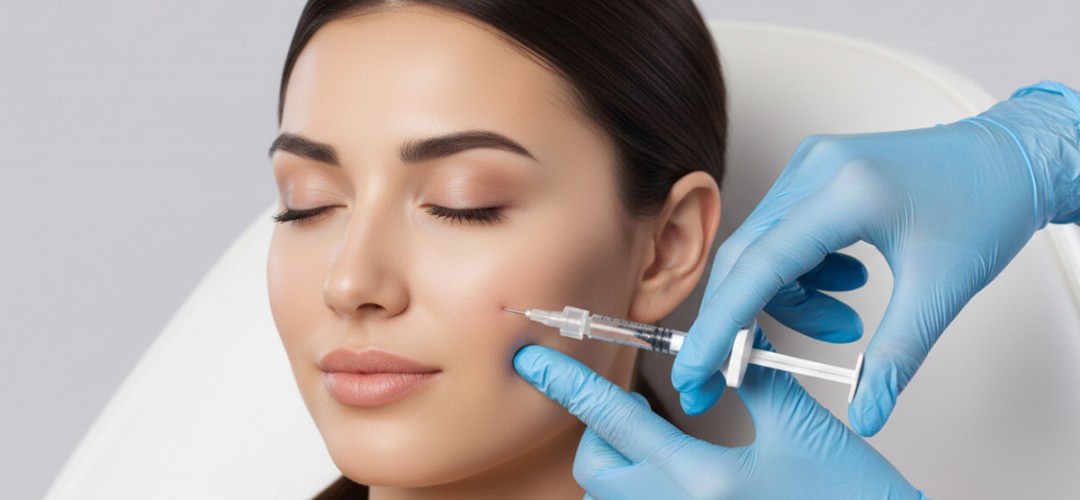
This is the most curious part: "Will it hurt?" Don't worry, technology has advanced significantly. About 20-30 minutes before the procedure, a powerful anesthetic cream is applied to your skin. After the skin is completely numb, the product is administered under the skin in tiny doses (with the mesotherapy technique) using very fine-tipped micro-needles.
What you will feel is at most like small mosquito bites. The entire process takes an average of 15 minutes. In other words, you can have it done during your lunch break and easily return to work.
"Can I Go Out in Public After the Procedure?"
It is perfectly normal to see tiny bubbles or slight redness on your skin immediately after the procedure. This indicates that the product has settled under the skin. These symptoms usually disappear completely within a few hours, or by the next morning at the latest, and are replaced by a bright, clear skin.
Filler, Botox, or Vaccine? How to Tell the Difference?
This is where the most confusion occurs. A youth vaccine is not a filling procedure; it does not change the shape of your face.
- Filler: Provides volume (inflates/shapes areas like lips and cheekbones).
- Botox: Smoothes mimic lines by freezing the muscles.
- Youth Vaccine: Improves skin quality.
In other words, when you have a youth vaccine, your face does not swell, your expression does not freeze, and a "done" look does not occur. Your skin just looks brighter, more vibrant, and rested. It is the safest harbor for those who say, "I don't want my face to change, but I want to look better and fresher."
When Does the Effect Start? How Long Does It Last?
This is not a magic wand; it is a biological repair process. Do not expect a major change as soon as you leave the procedure. In the first few days, that sweet glow and feeling of freshness begins. However, the real effect appears after the 2nd week when the skin starts to produce its own collagen. Skin tone evens out, pores tighten, and that dullness disappears.
Depending on the skin's needs, 2 or 3 session cures are generally recommended. Its effect lasts between 6 months and 1 year on average, depending on the person's metabolism, diet, and smoking habits.
In summary; your skin is the most valuable garment we wear. Instead of covering it with makeup, nourishing it from within to reveal its natural glow always feels better. Youth vaccine is one of the most effective methods that give your skin the "renewal start" it needs.