Facial Aesthetics
Preserving Proportion, Symmetry and Natural Expression in Facial Aesthetics
Facial aesthetics includes surgical procedures that evaluate the effects of aging, genetic characteristics, gravity, sun damage, facial expressions and changes in tissue volume on facial appearance. Since the nose, eye area, eyebrows, forehead, temples, lips, cheeks, jawline and neck are related to one another, planning is not made based on a single area alone.
In evaluations performed by Prof. Dr. Osman Kelahmetoğlu at the clinic in Istanbul Şişli / Nişantaşı, the aim is not to transform the face into a different identity, but to create a more balanced, rested and natural appearance while preserving the person’s unique facial character. The surgical plan is determined according to facial anatomy, bone structure, skin quality, tissue laxity, mimic characteristics and the person’s expectations.
What Is Facial Aesthetics?
Facial aesthetics is a broad field of plastic surgery that evaluates shape differences, signs of aging, tissue sagging and functional problems in specific areas of the face. Rhinoplasty, eyelid surgery, face and neck lift, brow lift, temple lift, lip aesthetics and ear aesthetics are included in this field.
In successful planning, the goal is not only to reduce lines or move tissues upward. The proportions between the upper, middle and lower parts of the face, the naturalness of facial expressions and the person’s overall facial character are evaluated together.
Holistic Facial Analysis
The forehead, eyebrows, eye area, midface, jawline and neck are examined not independently, but within a shared aesthetic harmony.
Personalized Surgical Plan
The technique to be applied is determined according to age, bone structure, skin quality, tissue laxity and the person’s expectations.
In Which Situations May Facial Aesthetics Be Considered?
Facial aesthetic procedures may be considered to correct congenital shape differences, reduce age-related changes or address functional problems such as breathing and visual field issues.
- The nose shape being incompatible with facial proportions
- Structural deviations inside the nose that affect breathing
- Excess skin forming on the upper eyelids
- Bags or hollowness under the eyes
- Downward displacement of the eyebrows and forehead tissues
- Sagging in the cheeks, jawline and neck area
- Lengthening of the upper lip distance or lip asymmetry
- The angle of the ears with the head being prominent
- Noticeable differences between the right and left sides of the face
Not every sign of aging is treated with the same method
Skin quality, volume loss and laxity in the muscle and connective tissues are different problems. Therefore, surgical and non-surgical options should be evaluated separately according to the person’s needs.
Rhinoplasty and Facial Profile
Rhinoplasty is a surgical procedure that aims to regulate the proportion between the shape of the nose and the other areas of the face. Since the nose is located in the center of the face, its relationship with the forehead, lips and chin directly affects the profile appearance.
During planning, the nasal dorsum, nasal tip, nostrils, skin thickness, bone and cartilage structure are evaluated together. In people with breathing difficulty, septum deviation and airway problems inside the nose are also included in the same evaluation.
Aesthetic Balance
The aim is for the nose to achieve a form that does not dominate the face and is compatible with the forehead, lips and chin structure.
Functional Evaluation
Deviations inside the nose, airway narrowness and breathing complaints may be addressed together with the aesthetic plan.
The same nose shape is not applied to every face
The goal in rhinoplasty is not to create a standard appearance, but to plan a result compatible with the person’s skin structure and facial proportions.
Eyelid Surgery
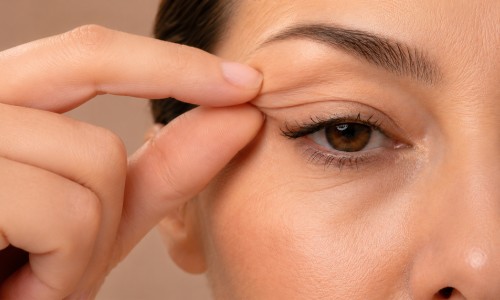
Eyelid surgery, or blepharoplasty, covers the evaluation of excess skin on the upper eyelids, bags on the lower eyelids and signs of aging around the eyes.
Excess skin on the upper eyelid may create only a tired appearance in some people, while in advanced cases it may also affect the visual field. In the lower eyelid, fat bags, skin laxity and hollowness in the transition area called the tear trough may be evaluated together.
The scope of eyelid surgery is not limited only to removing excess skin. Preserving or repositioning fat tissue and balancing the transitions around the eyes are important for a natural appearance.
Upper Eyelid
Excess skin that creates heaviness on the eyelid and, when necessary, prominent fat tissues are evaluated.
Lower Eyelid
Under-eye bags, skin laxity and the transition between the cheek and eyelid are considered together.
The eye area is one of the most delicate areas of the face
The surgical plan should be created by considering eyelid closure function, dry eye, eyebrow position and existing eye structure.
Almond Eye Surgery
Almond eye surgery includes surgical procedures that aim to adjust the position of the outer corner of the eye and the support of the lower eyelid according to the person’s existing eye anatomy.
This procedure is not performed to create the same slanted eye appearance in everyone. The structure of the eyelid, the position of the outer corner, the eyebrow tail, the ligaments around the eyes and the overall proportions of the face are evaluated together.
Outer Corner of the Eye
The position and support of the outer corner of the eye are evaluated while preserving anatomical structure.
Relationship Between the Eyebrow and Temple
The position of the eyebrow tail and temple tissue may directly affect the overall appearance around the eyes.
In planning for an almond eye appearance, intervening only in the eyelid may not be sufficient. If eyebrow tail drooping or laxity in the temple area accompanies it, a combined approach may be required.
Brow and Forehead Aesthetics
Brow and forehead aesthetics covers the evaluation of eyebrow position, forehead lines and tissue laxity in the upper face area together. Downward displacement of the eyebrows may make the eye area look heavier and may make excess skin on the upper eyelid more noticeable.
Brow lift and forehead lift procedures may be planned with classical, endoscopic or limited-incision methods. The technique to be used is determined according to forehead height, hairline, eyebrow shape, skin quality and the degree of laxity.
Adjustment of Eyebrow Position
The entire eyebrow or only the outer part may be repositioned in a way compatible with the natural structure of the face.
Lifting of Forehead Tissues
The aim is to move lax tissues in the forehead and brow area to a more balanced level.
Overlifting the eyebrows may disrupt natural expression
During planning, the person’s eyebrow shape and mimic characteristics should be preserved, and excessive changes that may create a surprised or artificial appearance should be avoided.
Temporal Lift and Temple Lift
Temporal lift and temple lift is an upper-face surgery planned to reduce laxity in the temple area and move the eyebrow tail to a more balanced position.
The temple area is closely related to the outer corner of the eye, the eyebrow tail and the midface. Therefore, temporal lift should not be considered only as a procedure that lifts the eyebrow, but as a surgery that affects the overall structure of the upper face.
Eyebrow Tail Support
The aim may be to reduce drooping in the outer part of the eyebrow and make the upper eye area appear more open.
Temple Area
Laxity in the temple tissues may be evaluated with incisions planned within the hair-bearing scalp.
Temporal lift and almond eye surgery are not the same procedure. In one, the temple and eyebrow tail tissues are at the forefront; in the other, the outer corner support of the eyelid is the main focus. Which method is suitable is determined after facial and eye-area examination.
Lip Aesthetics
Lip aesthetics covers the evaluation of lip shape, volume, symmetry and the distance between the nasal base and upper lip. With age, loss of lip volume, thinning of the upper lip and lines around the lips may be seen.
One of the most commonly evaluated procedures in surgical lip aesthetics is lip lift, which is performed in people whose upper lip distance is noticeably long. The aim of this procedure is not only to make the upper lip larger, but to create a more balanced relationship between the lip and nose.
Lip Lift
By reducing the distance between the nasal base and the upper lip, the visibility of the upper lip may be increased.
Lip Asymmetry
Congenital or acquired shape differences may be evaluated according to the person’s existing tissue.
Lip aesthetics should be planned together with the lower face
The proportions between the nose, lips, teeth and chin tip directly affect lip appearance.
Ear Aesthetics and Otoplasty
Ear aesthetics or otoplasty aims to adjust the angle between the ears and the head, ear folds and shape differences between the two ears.
In prominent ear appearance, ear cartilages are usually reshaped through incisions made behind the ear. The aim is not to bring the ears excessively close to the head, but to create an angle more compatible with the face and head structure.
Otoplasty is one of the facial aesthetic surgeries that can also be performed in childhood. The timing of prominent ear surgery is determined by considering ear development, the child’s level of social impact and ability to adapt to the operation process.
Adjustment of Ear Angle
The aim is to reduce the prominent angle between the ear and head and create a more natural position.
Cartilage Shaping
Missing or poorly defined ear folds may be reshaped to create a more balanced ear form.
Mini Facelift
Mini facelift is a more limited facelift approach that may be considered in people with a limited degree of laxity in the lower face and jawline.
In this method, incision length and the tissue dissection area may be more limited compared to a full facelift. However, mini facelift is not suitable for every degree of aging. More comprehensive methods may be required in people with noticeable neck laxity, advanced jowl formation or midface sagging.
Limited Lower Face Laxity
It may be considered in people with early accumulation along the jawline and mild tissue sagging.
More Comprehensive Needs
In advanced sagging and neck laxity, full face and neck lift may be a more suitable option.
A mini procedure is not always the more appropriate procedure
The scope of the method to be applied should be determined according to the existing anatomical need, not only according to the desire for a shorter recovery.
Facelift and Rejuvenation
Facelift and rejuvenation aims to reposition tissue sagging that occurs in the cheeks, jawline and lower face. In modern facelift surgery, it is important to evaluate not only pulling the skin, but also the supporting tissues under the skin.
In surgical approaches called SMAS or deep plane, the ligament and muscle tissues of the face may be repositioned in a controlled manner. The skin is then adjusted to adapt to the new tissue structure without creating excessive tension.
When planning facelift surgery in Istanbul, the surgical technique, the surgeon’s experience in facial anatomy, hospital conditions, postoperative follow-up and management of possible complications should be evaluated together.
Midface and Lower Face
Cheek tissues, mouth corners and laxity along the jawline may be repositioned according to the person’s needs.
Deep Tissue Support
For a more natural and balanced appearance, not only the skin but also the supporting layers of the face are evaluated.
Facelift surgery and fillers or other non-surgical applications do not address the same need. The difference between facelift surgery and liquid facelift should be evaluated based on the degree of tissue sagging, volume loss and the person’s expectations.
Neck Aesthetics
Neck aesthetics covers the evaluation of conditions such as fat accumulation under the chin, laxity in the neck skin, separation of the platysma muscles and loss of definition in the jawline.
If the problem in the neck area is caused only by excess fat, liposuction may be sufficient. If skin laxity and muscle bands are noticeable, a neck lift or a combined plan with facelift may be required.
Double Chin and Fat Accumulation
Localized fat accumulation under the chin may be evaluated with liposuction if skin elasticity is suitable.
Neck Muscles and Skin
Laxity in the platysma muscle and excess skin may require a more comprehensive neck lift plan.
The face and neck age together
When noticeable rejuvenation is targeted in the lower face, not evaluating neck laxity may create disharmony between the face and neck.
Combined Facial Aesthetic Procedures
Aging and shape changes in the face are often not limited to a single area. Upper eyelid surgery may be evaluated together with brow lift, facelift with neck aesthetics, or temple lift with almond eye surgery.
The decision for combined surgery is not made only to perform more procedures in the same session. Operation time, the person’s health status, healing capacity and surgical safety are considered. While some procedures may be performed in the same session, it may be more appropriate to divide treatment into stages in some people.
Eyelid and Brow
The source of heaviness in the upper eye area is determined by evaluating eyelid skin and brow drooping together.
Face and Neck
Jawline, cheek and neck laxity may be addressed within a shared rejuvenation plan.
Temple and Eye Area
The eyebrow tail, temple area and position of the outer eye corner are examined in relation to each other.
Nose and Profile
The nose, lips and chin relationship is evaluated together because it affects profile balance.
Evaluation Before Facial Aesthetics
Before facial aesthetics, the bone structure of the face, skin quality, fat tissue distribution, muscle movements, differences between the right and left sides and previous applications are evaluated. The person’s general health status, medications used, smoking and previous surgeries may affect the surgical plan.
During evaluation, not only the area that bothers the person, but also the anatomical cause underlying this appearance should be determined. For example, heaviness on the upper eyelid may be caused not only by eyelid skin, but also by eyebrow drooping.
Analysis of Facial Proportions
The relationships between the forehead, nose, lips, chin and neck are evaluated from different angles.
Tissue Quality
Skin elasticity, skin thickness, volume loss and laxity in connective tissues are examined.
Preservation of Facial Expressions
Preserving the natural movements of the face and the personal expression is an important part of the surgical plan.
Realistic Expectations
The person’s expectations and the changes that can be achieved anatomically are evaluated clearly.
Surgery and Recovery Process
The type of anesthesia, operation time and need for hospital stay in facial aesthetic operations vary according to the procedure to be performed. While limited procedures may be performed with local anesthesia or sedation, general anesthesia may be preferred in comprehensive surgeries such as face and neck lift.
After surgery, swelling, bruising, tightness, temporary sensory changes and mild limitation in facial movements may be seen. The appearance in the first weeks does not reflect the final result; tissues need time to adapt to their new position.
The duration of swelling and bruising after facelift may vary according to the surgical technique used, the scope of the procedure and the person’s healing characteristics.
First Days
Keeping the head elevated, using prescribed medications and following wound care recommendations are important.
Return to Social Life
The time to return to daily life and work is determined according to the scope of the procedure and the person’s working conditions.
Things to pay attention to during recovery
- Protecting the surgical area from trauma
- Using prescribed medications as recommended
- Avoiding smoking and nicotine use
- Not starting heavy exercise early
- Following sun protection recommendations
- Not missing follow-up appointments
- Consulting the doctor in case of increasing pain, fever or sudden swelling
The final result becomes more noticeable over time
Reduction of swelling, healing of incisions and settling of tissues into their new position may take weeks or months.
Possible Risks of Facial Aesthetic Surgeries
As with every surgical procedure, facial aesthetic surgeries may involve risks such as bleeding, infection, delayed wound healing, noticeable scarring, asymmetry, temporary or permanent sensory changes and anesthesia-related complications.
Depending on the treated area, procedure-specific risks may include difficulty closing the eyelid, breathing problems in nasal surgery, temporary weakness in facial nerves, changes in the hairline or decreased sensation around the ear.
The informed decision-making process is important
Before surgery, the goals, limitations, recovery process, possible risks and alternative methods of the procedure should be evaluated in detail.
Why Prof. Dr. Osman Kelahmetoğlu?
Facial aesthetic surgeries require evaluating the muscle, nerve, vascular, bone and connective tissue structures of the face together. For a natural appearance, it is important to preserve not only the skin, but also the deep supporting layers of the face and mimic movements.
Prof. Dr. Osman Kelahmetoğlu’s academic and clinical experience in plastic, reconstructive and aesthetic surgery contributes to evaluating nose, eyelid, brow, temple, face, neck, lip and ear surgeries with a holistic facial aesthetic approach.
Academic and Clinical Background
Scientific knowledge, command of anatomy and surgical experience form the basis of the evaluation and treatment process.
Preservation of Natural Expression
The aim is not to standardize the face, but to create a balanced change compatible with the person’s unique features.
Facial Aesthetic Surgery Prices in Istanbul
Facial aesthetic surgery prices in Istanbul may vary according to the type of surgery to be performed, the scope of the procedure, the surgical technique to be used, hospital conditions and whether more than one procedure is planned together.
Rhinoplasty, eyelid surgery, facelift, neck lift, brow lift, temporal lift, lip aesthetics and otoplasty have different surgical contents. For accurate pricing, the person should be examined and the surgical plan should be determined.
Frequently Asked Questions About Facial Aesthetics
Which facial aesthetic procedure may be suitable for me?
The suitable procedure is determined by evaluating the bone structure of the face, skin quality, degree of sagging, volume loss, existing asymmetries and the person’s expectations together. The same procedure or the same surgical plan is not applied to every person.
Can a natural appearance be preserved after facial aesthetics?
A natural appearance is related to appropriate patient selection, planning suitable for facial anatomy, balanced repositioning of tissues and consideration of the person’s existing facial character.
What is the difference between a facelift and a mini facelift?
Mini facelift may be considered in some people with more limited tissue laxity. In cases where sagging in the lower face and neck area is more noticeable, more comprehensive facelift methods may be required. The suitable method is determined through examination.
Does facelift surgery change facial expression?
The aim in surgical planning is not to change the person’s facial expressions or facial character, but to reposition tissues that have moved downward in a way suitable for facial anatomy. The result may vary according to personal anatomy and the technique applied.
Does eyelid surgery affect vision?
Noticeable excess skin on the upper eyelid may affect the visual field in some people. During surgical planning, eyelid closure function, the ocular surface and existing eye health should be considered.
Can breathing problems also be evaluated in rhinoplasty?
If septum deviation or anatomical problems affecting the airway are present inside the nose, functional interventions may also be evaluated together with aesthetic planning in suitable patients.
Will there be scars after facial aesthetic surgeries?
Scars occur in procedures involving surgical incisions. The location of incisions varies according to the surgery performed and, whenever possible, they are placed in less noticeable anatomical areas such as natural folds, the hair-bearing scalp or around the ear. The appearance of scars may vary according to personal wound healing.
When can I return to work after facial aesthetics?
The time to return to work varies according to the scope of the procedure, the person’s recovery speed and working conditions. Limited procedures and more comprehensive surgeries such as face and neck lift do not have the same recovery time.
Do facial aesthetic results change over time?
The changes achieved with surgery are intended to be preserved for a long time; however, the aging process continues. Sun exposure, smoking, weight changes, skin structure and genetic characteristics may affect facial tissues over time.
Can more than one facial aesthetic procedure be performed in the same session?
In suitable patients, some facial aesthetic procedures may be combined within the same surgical plan. The decision is made by evaluating the total scope of the operation, anesthesia duration, the person’s general health status and surgical risks together.
Contact and Examination Appointment
You can create an examination appointment at my clinic in Istanbul Şişli to evaluate your condition related to rhinoplasty, eyelid surgery, brow and forehead aesthetics, temporal lift, face and neck lift, lip aesthetics or ear aesthetics.
During examination, facial anatomy, skin characteristics, your current complaints, expectations and applicable surgical options are evaluated together; the recovery process and possible risks are discussed according to your personal condition.
Facial Aesthetic Examination in Istanbul Şişli
You can create an examination appointment or get information via WhatsApp to evaluate your facial structure, skin characteristics and applicable surgical options.