About

Plastic, Reconstructive and Aesthetic Surgery

Prof. Dr. Osman Kelahmetoğlu

A specialist approach that combines academic expertise with international clinical experience in aesthetic surgery, reconstructive surgery, breast surgery, and body contouring.
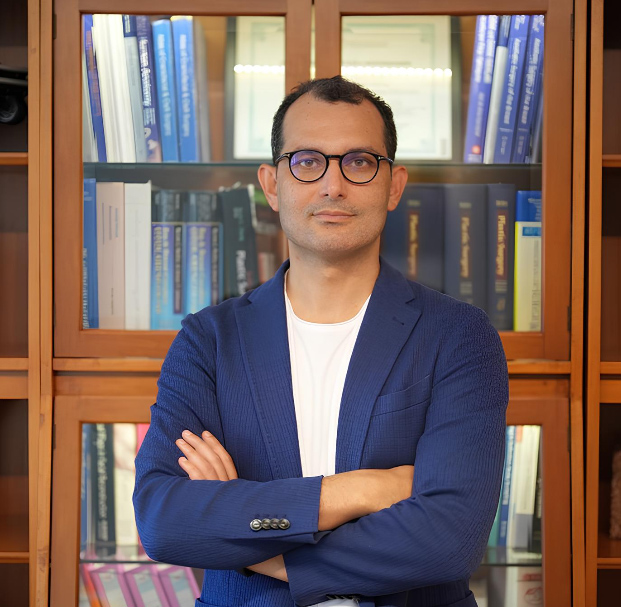
Prof. Dr. Osman Kelahmetoğlu
About

Who Is Osman Kelahmetoğlu?

Prof. Dr. Osman Kelahmetoğlu is a plastic surgery specialist who combines his academic expertise in aesthetic surgery, reconstructive surgery, breast surgery, and body contouring with international clinical experience.

In surgical planning, each patient’s anatomical structure, expectations, lifestyle, and recovery process are evaluated individually. The goal is to achieve natural-looking and long-term balanced results that are compatible with facial and body proportions.

His experience in breast aesthetics, breast reconstruction, facial aesthetics, body contouring, and revision surgery supports achieving strong results from both aesthetic and functional perspectives.

55+ Scientific publications and academic studies
20+ Years of professional experience
USA Experience in Belgium and Finland
Prof. Professor title as of 2024

Areas of Expertise and Surgical Approach

The clinical approach is based on comprehensive planning that evaluates aesthetic surgery and reconstructive surgery together. Not only the patient’s current needs, but also long-term satisfaction, the expectation of a natural appearance, and medical suitability are taken into account.

Breast Aesthetics

In procedures such as breast augmentation, breast reduction, breast lift, and breast asymmetry correction, natural and balanced results suitable for the person’s body proportions are targeted.

Breast Reconstruction

Breast reconstruction after mastectomy, perforator flaps, and reconstructive breast surgery are among the important areas of expertise in this field.

Facial Aesthetics

In facial rejuvenation, eyelid and eye-area aesthetics, and procedures targeting the neck and facial contour, results that preserve facial expression and avoid an artificial appearance are prioritized.

Rhinoplasty

In rhinoplasty planning, the overall proportions of the face, breathing function, and the person’s facial structure are evaluated together.

Body Contouring

In liposuction, tummy tuck, and post-bariatric body contouring procedures, skin quality, tissue balance, and the recovery process are taken into consideration.

Revision Surgery

In cases where previous surgeries require correction, advanced planning is carried out with respect for the existing tissue structure and based on realistic expectations.

The main goal is to achieve results that are balanced rather than exaggerated, provide long-term satisfaction rather than short-term change, and are strong not only aesthetically but also functionally.

Academic and Clinical Background

2005

He graduated from Gaziantep University Faculty of Medicine and began his specialty training at the Department of Plastic, Reconstructive and Aesthetic Surgery at Samsun Ondokuz Mayıs University.

USA

He worked as a clinical fellow in aesthetic surgery and body contouring at El Paso Cosmetic Surgery Center and as a clinical observer in post-bariatric body contouring surgery at the University of Pittsburgh Medical Center.

2015

With the overseas scholarship of the Turkish Reconstructive Microsurgery Association, he served as a clinical fellow at Ghent University in Belgium in the fields of aesthetic-reconstructive breast surgery and perforator flaps.

2016

With the scholarship granted by the European Plastic Surgery Association for young plastic surgeons, he carried out studies in reconstructive breast surgery at the University of Helsinki in Finland.

2024

He received the title of Professor. He continues his academic work at the Department of Plastic, Reconstructive and Aesthetic Surgery at Istanbul Okan University Faculty of Medicine.

Topics Patients Most Frequently Ask About

  • Which procedures are among the most commonly performed surgical areas?
  • How does academic expertise in breast aesthetics and breast reconstruction affect treatment planning?
  • How is a natural appearance preserved in facial aesthetics?
  • Why is patient selection important in body contouring surgeries?
  • Why is personalized planning decisive in rhinoplasty, facial aesthetics, and breast aesthetics?
  • Why does revision surgery require more advanced experience?
  • How do academic background and international experience contribute to surgical outcomes?
  • What are the advantages of an approach that evaluates aesthetic and reconstructive surgery together?

Frequently Asked Questions

Rhinoplasty (nose surgery) is generally performed at ages when bone and cartilage development is complete. It is suitable from an average age of 16-17 for women and 17-18 for men. However, both physical development and psychological maturity should be considered before making an aesthetic decision.

Yes. Volume can be added to the breast using the person's own fat tissue. However, it is difficult to achieve large volumes in a single session. It is generally suitable for small-to-medium enlargements.

Aesthetic or plastic surgery procedures can be safely performed during the summer months as well. The important thing is to follow post-operative care instructions, ensure sun protection, and pay attention to hygiene rules.

Breast reduction surgery is recommended once the breasts have completed their development. It can be performed 6 years after the first menstrual period. This means that for some, it could be earlier than age 18. It can also be performed at younger ages for medical reasons (pain, posture disorders, etc.), but a physician's evaluation is essential.

Breast augmentation with hyaluronic acid or similar fillers is not recommended. It can lead to infections, complications, and serious health problems. In some cases, it can even lead to total mastectomy (removal of the breast).

There is no specific age limit to start Botox applications. Generally, it can be started in the mid-20s to 30s for preventive purposes before wrinkles form. It can also be applied at later ages; however, the fact that wrinkles have deepened may affect the result.

Light walks after surgery can be performed within a few days. Returning to work occurs in 3–5 days. However, it is generally recommended to wait 4–6 weeks for heavy lifting and exercises that strain the chest muscles.

In breast augmentation, internationally approved (FDA, CE certified) and reliable brands that have been used for many years should be preferred. Brands with scientifically proven quality and long warranty periods are a priority.

The compression garment helps reduce post-operative edema and maintain the shape. For most patients, it is recommended to be used for 3–6 weeks, especially continuously for the first 2 weeks.

Yes. Breast implants do not damage the mammary glands; most women can breastfeed comfortably.

In breast augmentation surgery, silicone implants can be placed in submuscular, subfascial, or subglandular planes. The choice of plane is determined by the surgeon based on breast structure, skin thickness, existing breast tissue, and aesthetic expectations.

Entering a pool before wound healing is complete after surgery increases the risk of infection. Swimming can generally be started 3–4 weeks later, once the stitches are removed and skin integrity is fully established.

Yes. Implants can be surgically removed or replaced if desired.

Above the muscle (subfascial / subglandular): Recovery time is shorter, but the edges of the implant may be visible in very thin individuals. Below the muscle (submuscular): It provides a more natural appearance and yields more stable results in the long run. However, the recovery period is slightly longer.

No. The choice is not made based on volume alone. The main criterion is the base diameter of the breast, i.e., the footprint measurement. Rib cage structure, skin elasticity, breast tissue, and expectations are also taken into account.

It can be applied to women who desire minimal changes in breast volume or to those in physically demanding professions such as military service or sports.

Breastfeeding is generally possible after breast reduction or augmentation surgeries as long as the milk ducts are not damaged. However, in some surgical techniques, breastfeeding ability may be affected, so this issue should definitely be discussed with the surgeon before surgery.

Some superficial moles with no color change can be removed with a laser. However, dark-colored, irregularly shaped moles or those showing changes must be evaluated with a dermatoscope.

No. There is no direct link between breast implants and breast cancer. Only the rare BIA-ALCL lymphoma has been associated with some implants. The risk is extremely low.

Special masks or bandages are generally recommended for 1-2 weeks after a facelift to reduce edema and promote tissue healing. The duration may vary depending on the extent of the operation and individual healing speed.

There is no scientific evidence that moles removed with a medical indication and proper methods increase the risk of skin cancer. However, suspicious moles must be evaluated with a pathological examination.

Botox applications are not recommended during pregnancy and breastfeeding. Aesthetic procedures should be avoided during this period, and such treatments should be planned for after the completion of the birth and breastfeeding stages.

Postoperative scars will always remain. In many people, scars fade over time and become inconspicuous. This type of wound healing and scar formation varies from person to person. Genetic factors, skin texture, and the post-operative care process affect the permanence of scars.