
How Long Does Swelling And Bruising Last After A Facelift Surgery?
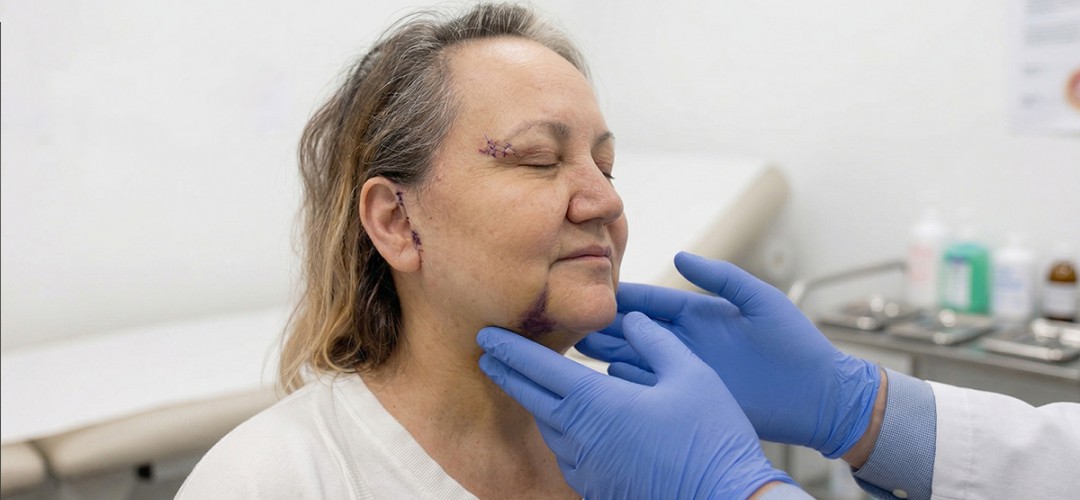
What is the recovery process like after a facelift?
One of the most common topics of curiosity for patients considering facelift surgery is the post-operative recovery process. Especially how long it will take for swelling and bruising to subside is very important in terms of returning to social life.
This process is not the same for every patient. The regression period of swelling and bruising may vary according to both the scope of the surgery performed and factors depending on the patient.
What Does the Duration of Swelling and Bruising Depend On?
According to my own approach, the duration of swelling and bruising after a facelift is directly proportional to the extent of the surgery. In more limited procedures, the recovery time is shorter, while in more comprehensive surgeries, this period may be longer.
However, not only the scope of the surgery but also patient-related factors are quite important here. Factors such as skin structure, age, healing capacity, and the circulatory system can directly affect the process.
Therefore, swelling or bruising that lasts longer than expected can be seen in some patients.
Swelling and Bruising After Mini Facelift
In recent years, my first choice for suitable patients has been mini facelift surgery. In such more limited procedures, the duration of swelling and bruising is generally shorter.
In my own practice, a large part of the swelling and bruising after a mini facelift decreases significantly within 1-2 weeks; in fact, this period may be even shorter in some patients.
However, in some cases, reactions may be seen in the late period due to the sutures used internally during the surgery. This situation usually occurs 3-4 weeks after the surgery and may give the patient the impression that the swelling period is extending.
Such reactions are mostly localized and resolve spontaneously over time.
Swelling and Bruising After Full Facelift
In more comprehensive facelift surgeries, the duration of swelling and bruising can naturally be longer.
According to my clinical experience, this period usually varies between 4-6 weeks in full facelift surgeries.
During this process, temporary stiffness, mild pain, or small indentations (dimple appearance) on the skin may occur in some patients, especially due to the sutures placed on the SMAS layer.
These situations are mostly temporary and resolve spontaneously within the same healing process.
When Does Swelling and Bruising Completely Disappear?
Recovery after facelift surgery takes place in several stages. Swelling and bruising, which are prominent in the first weeks, decrease over time, but it takes longer for the tissues to fully settle.
According to my approach, it is necessary to wait an average of 9 months to see the final result in facelift surgeries.
During this period, the face gradually regains its natural form, and the real result of the surgery emerges.
How Long Does It Take for Post-Surgery Scars to Fade?
The appearance of scars formed after facelift surgery also changes over time.
Usually, the scars remaining in front of and behind the ear become quite indistinct and are often not noticed.
However, in surgeries performed together with a neck lift, scars remaining in the scalp can sometimes be a bit more prominent. Despite this, these scars generally remain in invisible areas and are not noticed from the outside.
Why Does the Recovery Process Vary from Person to Person?
Every patient's recovery process is different. Even if the same surgery is performed, factors such as:
- Skin structure
- Age
- Circulatory system
- Smoking
- General health status
can directly affect the recovery time.
Patience is Required for a Natural Result
The changes observed in the first weeks following a facelift surgery are not the permanent results. This is a healing process, and over time, the face will acquire a more natural appearance.
According to my own approach, the most accurate result is achieved by waiting for this process to be completed without rushing.
With the right technique, appropriate patient selection, and a patient recovery process, it is possible to achieve a natural and balanced look.