
Facelift Surgery or Liquid Facelift? Which Method is Suitable for Whom?
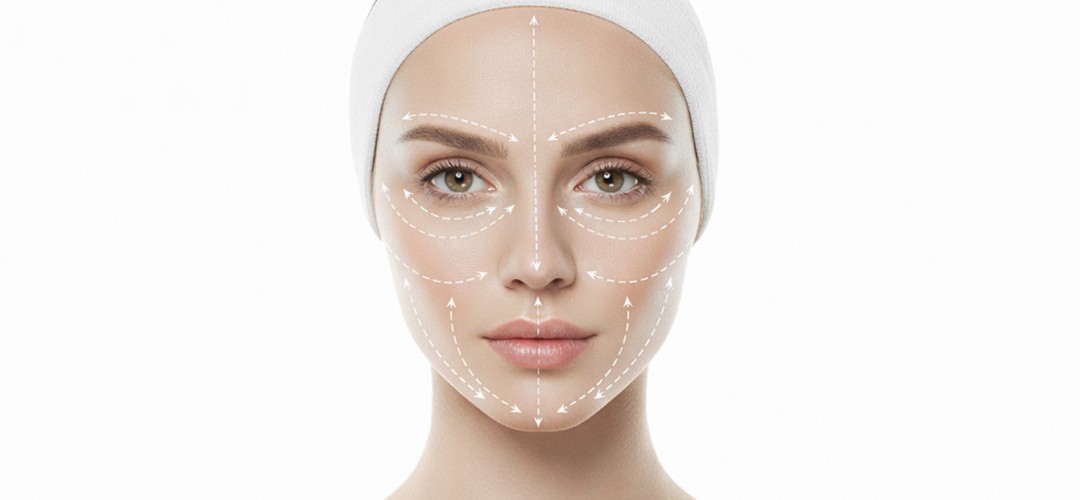
Differences Between Facelift Surgery and Liquid Facelift
When it comes to facial rejuvenation, there are two most frequently compared approaches: surgical facelift surgery and liquid facelift (non-surgical, injection-based facial renewal applications). Both aim for “more vigorous, tighter and more balanced facial features”; however, the mechanism of action, permanence and for whom it is suitable are completely different. In this article, we clarify the differences in a way that will make it easier for you to choose the right method.
What is Facelift Surgery? Which Problems Does It Target?
Facelift surgery (facelift/rhytidectomy) aims to surgically correct problems such as skin sagging, cheek drooping, loosening that becomes evident on the jawline and loss of recovery in the neck area that occur with age. The primary goal here is not only to “stretch” the skin; but to support deep tissues in accordance with the facial expressions and anatomy and to obtain a more balanced rejuvenation.
Highlights of Surgical Facelift
- Provides a stronger and more comprehensive recovery in significant sagging.
- Targets a clearer improvement in jawline and neck contours.
- With correct planning, results can be long-lasting.
Considerations in Surgical Facelift
- Requires anesthesia, surgery planning and a healing process.
- Temporary effects such as swelling/bruising may be seen; return to social life varies from person to person.
What is Liquid Facelift? Is Facial Rejuvenation Possible Without Surgery?
Liquid facelift is not a single procedure; it should often be considered as a combination approach planned specifically for the individual. The goal is to balance the volume loss seen in different parts of the face, improve facial proportions, support skin quality and create a more vigorous appearance. This approach may include appropriate combinations of methods such as filler applications, injections that increase skin quality and biostimulant contents.
Advantages of Liquid Facelift
- It is not surgical; a quick return to daily life is possible for most patients.
- A natural, controlled and gradual improvement can be targeted.
- It can provide effective support for early signs of aging.
Limits of Liquid Facelift
- If there is significant sagging, it may not be sufficient on its own.
- The duration of effect varies according to the method and tissue need; repeat sessions may be required.
- Since wrong planning can lead to undesirable results such as a feeling of weight on the face and unbalanced volume, a specialist evaluation is essential.
Facelift or Liquid Facelift? 5 Criteria Determining the Choice
1) Level of Sagging and Jawline
If significant drooping in the cheeks, “loss of recovery” in the jawline and loosening in the neck are evident, surgical facelift may be a stronger option. In milder loosenings, supportive results can be obtained with liquid facelift.
2) Volume Loss or Tissue Excess?
Aging in the face sometimes progresses predominantly as volume loss (emptying in the cheekbone area, under-eye hollows); and sometimes tissue sagging comes to the fore. Liquid facelift may be more suitable for people where volume loss is dominant; if tissue sagging is dominant, surgical planning comes to the fore.
3) Strength and Permanence of the Expected Result
If a “more dramatic and long-lasting” change is targeted, surgical options can be evaluated. If a “more natural, lighter and controlled” renewal is targeted, the liquid facelift approach stands out.
4) Healing Process and Time Plan
Work pace, social calendar and personal comfort expectations play an important role in the choice. Since the desire for a quick return is common in people living in a dense urban pace like Nişantaşı, Istanbul, non-surgical options may be prioritized for some patients.
5) Is Age the Sole Determining Factor?
No. Age can be a reference but the real determinant is skin quality, tissue elasticity, genetics, weight changes and facial anatomy. Therefore, absolute patterns like “liquid in the 30s, surgery in the 50s” are not always correct.
Which Method is More Suitable for Whom?
Facelift Surgery May Be More Suitable
- Those with significant sagging in the cheek and jawline
- Those experiencing loss of recovery in the neck area
- Those who want a longer-lasting and stronger rejuvenation
Liquid Facelift May Be More Suitable
- Those with mild-to-moderate lining and volume loss
- Those who cannot devote a long time for recovery
- Those targeting a natural and gradual renewal
The Most Correct Approach: Personalized Facial Rejuvenation Plan
In practice, the best results are obtained with a personalized facial rejuvenation strategy rather than the idea of a “single procedure”. While surgical planning is at the forefront for some patients, a natural recovery can be achieved with injection-based applications for some patients. Even in some cases, combination approaches planned with the right timing can give more balanced results.
If you would like to see a broader framework about facelift methods, facial rejuvenation options and the general approach in this field, you can take a look at the guide on our facial aesthetics page: facelift and rejuvenation.
Not the “Best” Method, but the “Most Suitable for You” Method
In facial rejuvenation, the right question should not be “Which one is better?”, but “Which one is more suitable for my face?”. By evaluating the level of sagging, volume loss, skin quality and life pace together, it becomes clear which of the surgical facelift or liquid facelift options will be more accurate.
Note: This content is for informational purposes. The most accurate planning is made individually with examination and facial analysis.