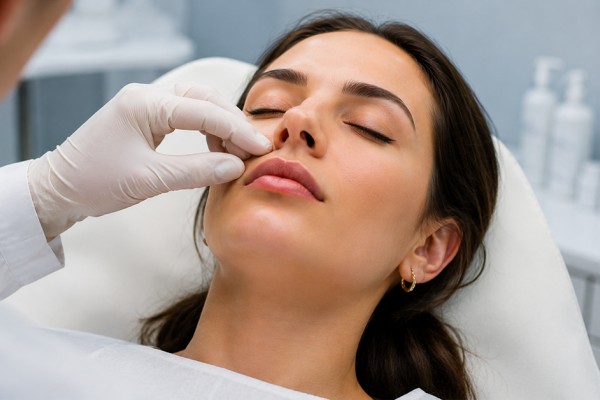
What is a Mini Facelift? How does it differ from a Deep Plane Facelift, and who is it suitable for?

What is a Mini Facelift?
A mini facelift is a surgical procedure applied to correct mild to moderate sagging, particularly in the lower and middle regions of the face. Compared to comprehensive facelift and rejuvenation procedures, it involves working in a more limited area and aims for a more natural rejuvenation.
This procedure is generally preferred for individuals experiencing slight distortion in the facial oval, loss of definition in the jawline, and downward displacement in the cheek area. The goal is not to change the facial expression, but to provide a more rested and tightened appearance.
Differences Between Mini Facelift and Deep Plane
Mini facelift and deep plane facelift, although they serve the same purpose, differ in terms of surgical scope and target patient groups.
Deep plane facelift is a more comprehensive method where deeper tissues are released, and it is preferred for advanced levels of sagging. A mini facelift, on the other hand, is a procedure that can provide effective results in patients with limited sagging at an earlier stage.
Therefore, these two methods should not be evaluated as alternatives to each other, but as options directed toward different patient groups.
Who is a Mini Facelift Suitable For?
Mini facelift surgery may generally be suitable for individuals with the following characteristics:
- People who have started showing early signs of aging on their face
- Those with mild sagging and lack of definition in the jawline
- Patients with downward displacement in the cheek area
- Individuals desiring a more natural and unexaggerated rejuvenation
Suitability varies for every patient. Therefore, surgical planning must definitely be made after a personal examination.
Is a Mini Facelift Sufficient for Every Patient?
A mini facelift may not be sufficient for every patient. Particularly for individuals with advanced facial sagging, more comprehensive surgical techniques may be required.
However, in patients with mild to moderate sagging, natural and satisfying results can be achieved with a mini facelift instead of a larger surgical procedure.
In my clinical practice, instead of applying the same method to every patient, I prefer to determine the most appropriate approach according to the facial structure and the degree of sagging.
How is a Mini Facelift Performed?
Mini facelift surgery is generally performed through small incisions made around the ears. This way, surgical scars are hidden as much as possible.
During the procedure, tissues in the lower region of the face are repositioned, and excess skin is removed in a controlled manner. The aim is not to stretch the face, but to move sagging tissues to where they should be.
This approach ensures a more natural and unexaggerated appearance is achieved.
Does a Mini Facelift Give Natural Results?
The most important goal in mini facelift surgery is to provide rejuvenation while preserving the natural expression of the face. In procedures performed with correct patient selection and appropriate techniques, an "operated look" does not occur.
In a successful result, the face looks more rested, more vibrant, and more balanced.
What is the Post-Operative Process Like?
The recovery process after a mini facelift is generally more comfortable than classic facelift surgeries. Mild swelling, bruising, and a feeling of tightness may be seen in the first days.
- Rest is recommended for the first few days
- Swelling usually begins to subside within 1 week
- Patients can return to their social lives in a short time
Following the doctor's recommendations during the healing process is very important for the quality of the result obtained.
Mini Facelift or Deep Plane?
When choosing between a mini facelift and a deep plane facelift, the most important criterion is not the popularity of the procedure, but the needs of the patient.
While a mini facelift may be sufficient for more limited sagging, more comprehensive techniques may be required for advanced sagging.
Therefore, the correct method must be determined individually after an examination.
Frequently Asked Questions
At what age is a mini facelift performed?
There is no specific age limit for a mini facelift. Rather, the degree of facial sagging is the decisive factor.
Does a mini facelift replace a deep plane facelift?
Not always. While a mini facelift is suitable for milder sagging, deep plane is preferred in more advanced cases.
Are there scars after a mini facelift?
Since incisions are usually planned around the ear, the scars are not prominent and become less noticeable over time.
Is a mini facelift permanent?
Results can be long-lasting. However, as the aging process continues, sagging may occur again over the years.
The most accurate approach for mini facelift surgery is determined after a personal examination. Personalized planning should be made for every patient.